
Crispy and delicious vegetable pakora is one of the most loved Indian snacks preferred during the monsoon season. These naturally gluten free and vegan Indian vegetable fritters are easy to make with a few pantry staples and vegetables.
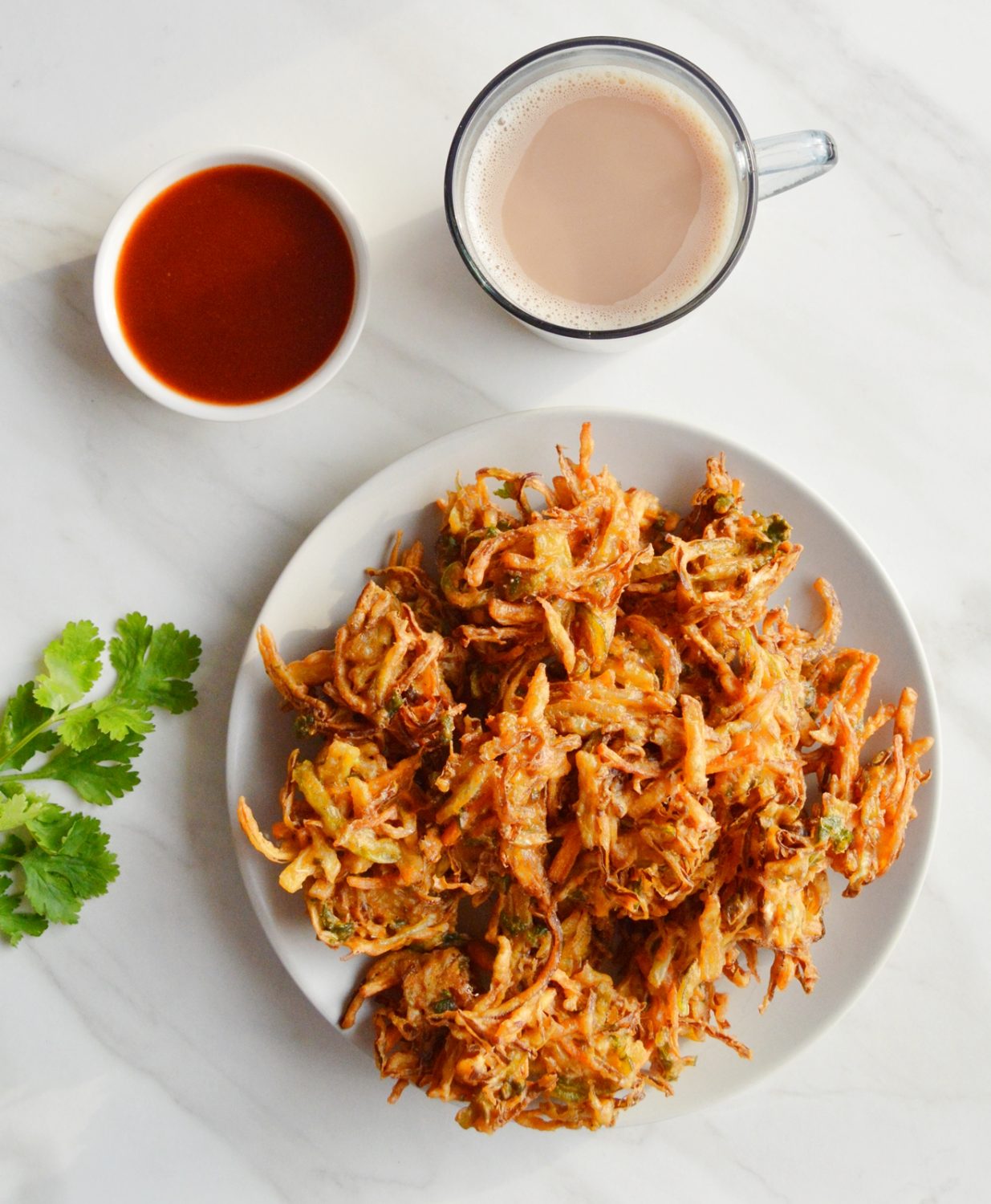
Pakora, also called pakoda, pakodi, bhajia, is a quick and easy snack that gets ready in less than 30 minutes. It is an ideal snack to serve the sudden guest as you can almost use any vegetables that you have on hand.
It is a great dish to serve at any party or to take to potlucks. The best part of the vegetable pakora recipe is you can sneak in any vegetable and kids eat them without any fuss.
Ingredients
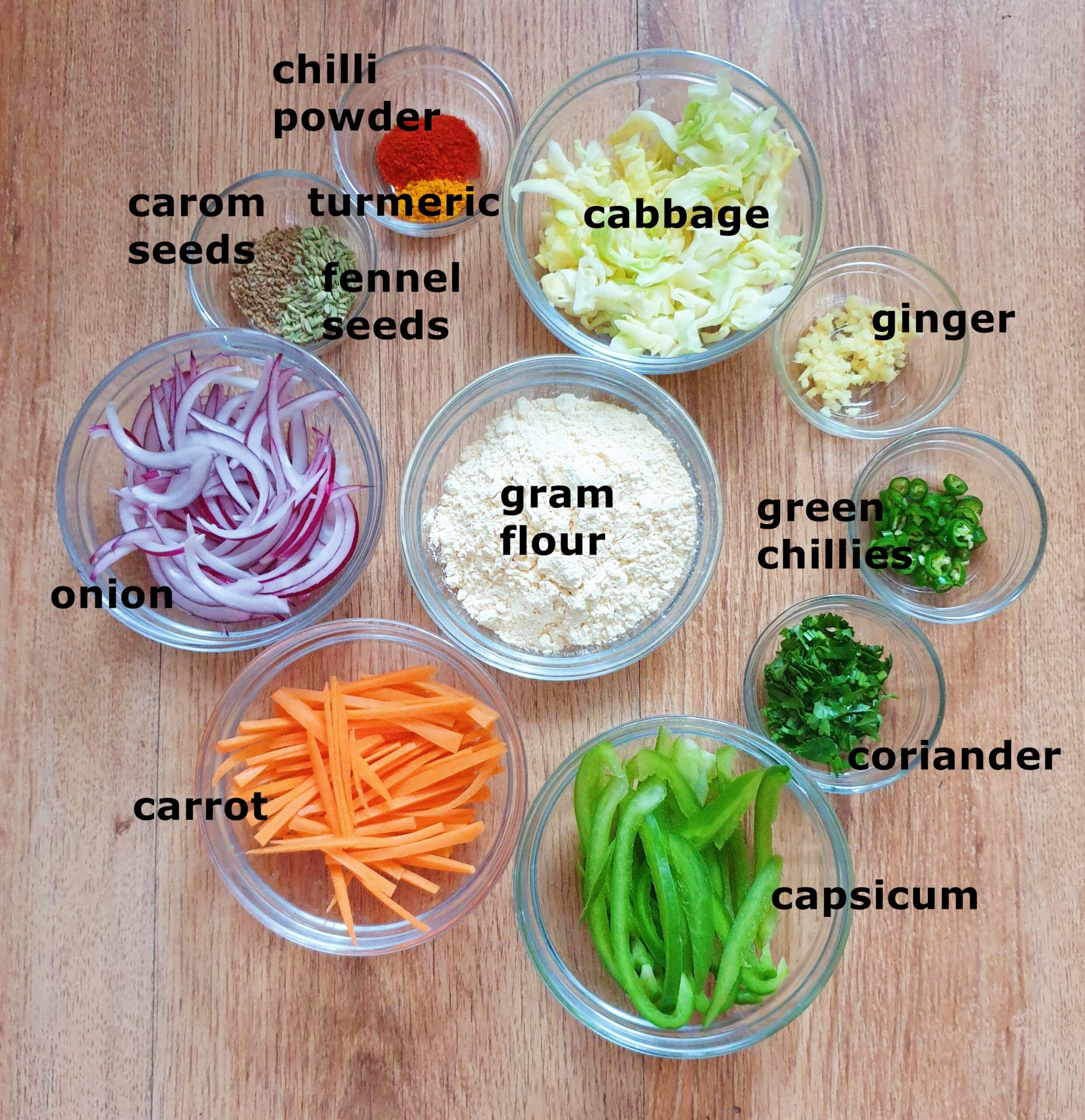
Vegetables: I use assorted vegetables such as onion, cabbage, bell pepper, potato carrot. Grated ginger and finely chopped green chilies for a fiery taste.
Spices: Crushed fennel seeds and carom seeds are the star ingredients in this recipe that add a great flavour. Additional basic spices red chilli powder and turmeric powder are required.
Flour: Gluten-free gram flour to coat the vegetables.
Oil: Sunflower oil for deep frying.
Water: Just enough to bind the battered vegetables together.
See the recipe card for quantities.
How to make pakoras?
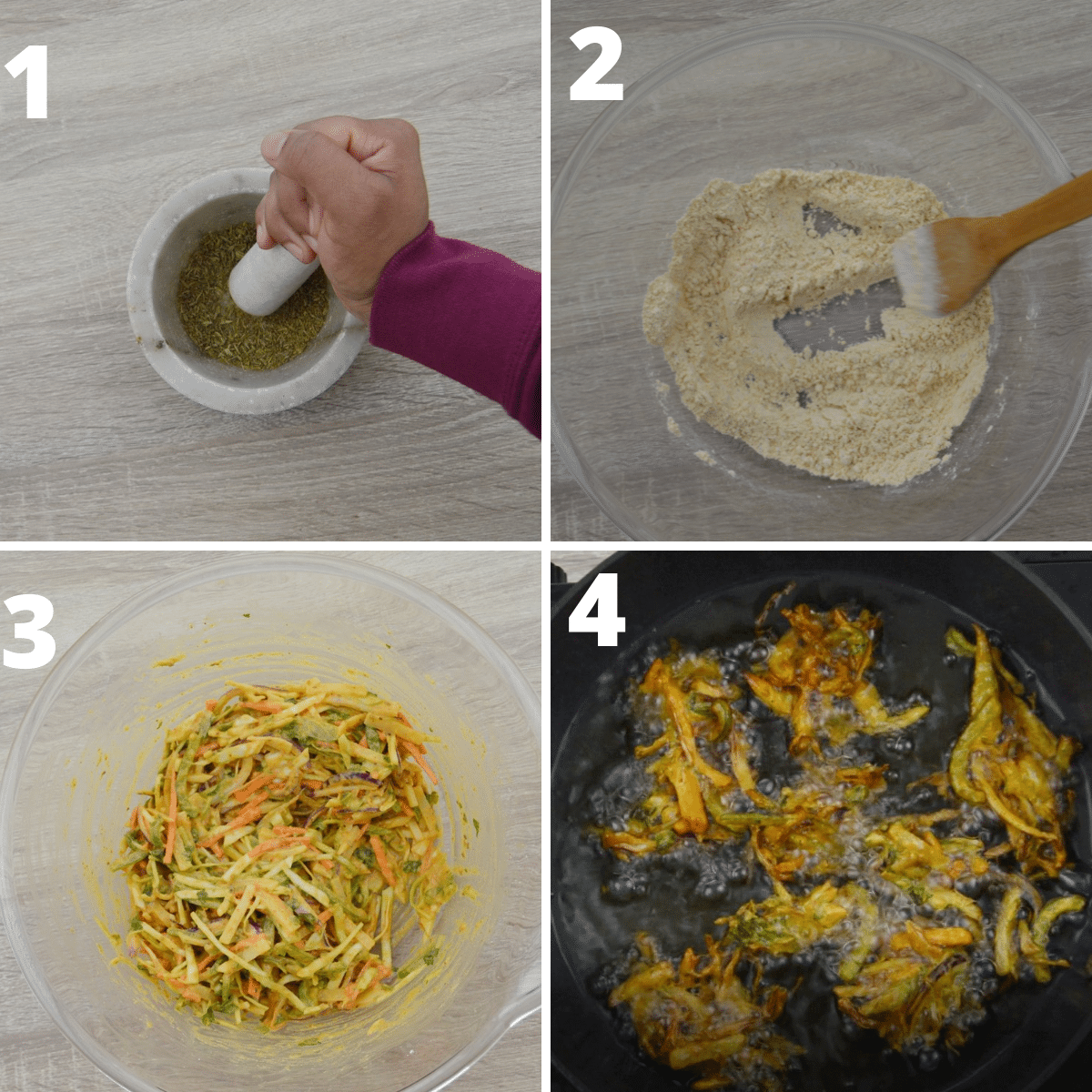
- Crush fennel seeds and carom seeds in mortar and pestle.
2. Combine gram flour, dry spices, salt, crushed spices.
3. Add the vegetables and mix well. Add just enough water to make a thick batter that just coats and binds vegetables together.
4. Heat oil in kadai over medium flame. Drop pakoras in medium hot oil. Fry them until golden colour and crispy.
Serve delicious deep fried mixed vegetable pakoras with mint chutney and chai.
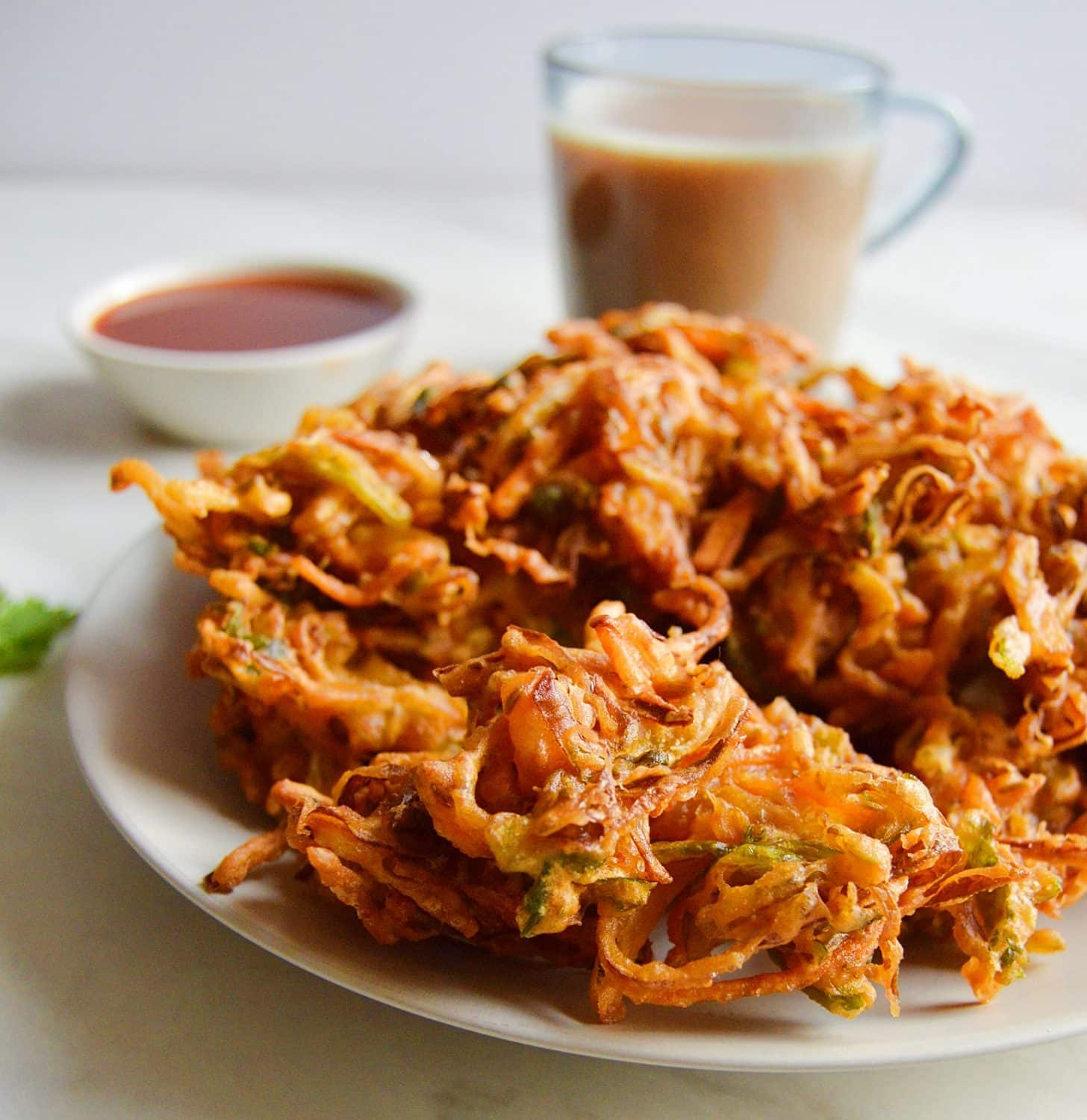
What is pakora?
Pakoras are fritters made with gram flour, a selection of spices and vegetables/ paneer. Battered vegetables are deep-fried in oil until crisp and golden.
Flavour Variations
Shredded courgettes, spinach, aubergine/eggplant, and plantain make a good addition to this easy pakora recipe.
Mix in cumin, half a teaspoon garam masala or crushed coriander seeds for an extra flavour.
Crushed dried fenugreek leaves (kasuri methi) add a lovely flavour.
Serving Suggestions
Serve these crispy vegetable pakoras as an appetiser with chutneys such as green chutney, sweet tamarind chutney, yogurt mint sauce or tomato ketchup.
Vegetable pakora pairs well as a side dish with flavoured rice dishes – lemon rice, coconut rice, tamarind rice or tomato rice.
Pakoda is a perfect evening snack to enjoy with a cup of masala chai or haldi doodh.
Tips and Tricks
Water: Ensure to add just enough water so that the vegetables are well coated with the gram flour batter.
Remove excess water from vegetables to prevent them from absorbing too much oil while frying.
Fry immediately: Once the batter is ready, fry the pakoras immediately. Do not keep the batter for long as the moisture released from the vegetables makes it runny.
Measurements: Consider measurements as guidelines. You may need a little more or less water to make a thick batter.
Crispy pakoras: To ensure pakoras remain crispy, DO NOT keep the freshly made hot pakoras in an airtight container with lids closed.
Heat the Oil: Heat the oil to the right temperature before frying. Drop a small amount pakora mixture into the oil to check if it’s hot enough. If it sizzles and rises to the surface, the oil is ready.
Fry in Batches: Avoid overcrowding the frying pan or kadai. Fry vegetable pakodas in multiple batches to ensure they cook evenly and turn crispy.
Drain Excess Oil: After frying, place the mixed pakoras on a plate lined with paper towels to remove excess oil. This prevents them from becoming greasy.
Serve Hot: Pakodas are best enjoyed when hot and fresh. Serve them immediately with chutney or sauce of your choice.
Sieve the flour: Ensure to sieve the gram flour before adding to the vegetables to break the lumps and to eliminate any debris or impurities if present.
Heat oil: Ensure to heat oil over medium flame. By using medium heat, you can keep the oil temperature stable and controlled. The oil can quickly overheat with high heat, resulting in uneven cooking and possibly charring pakodas.
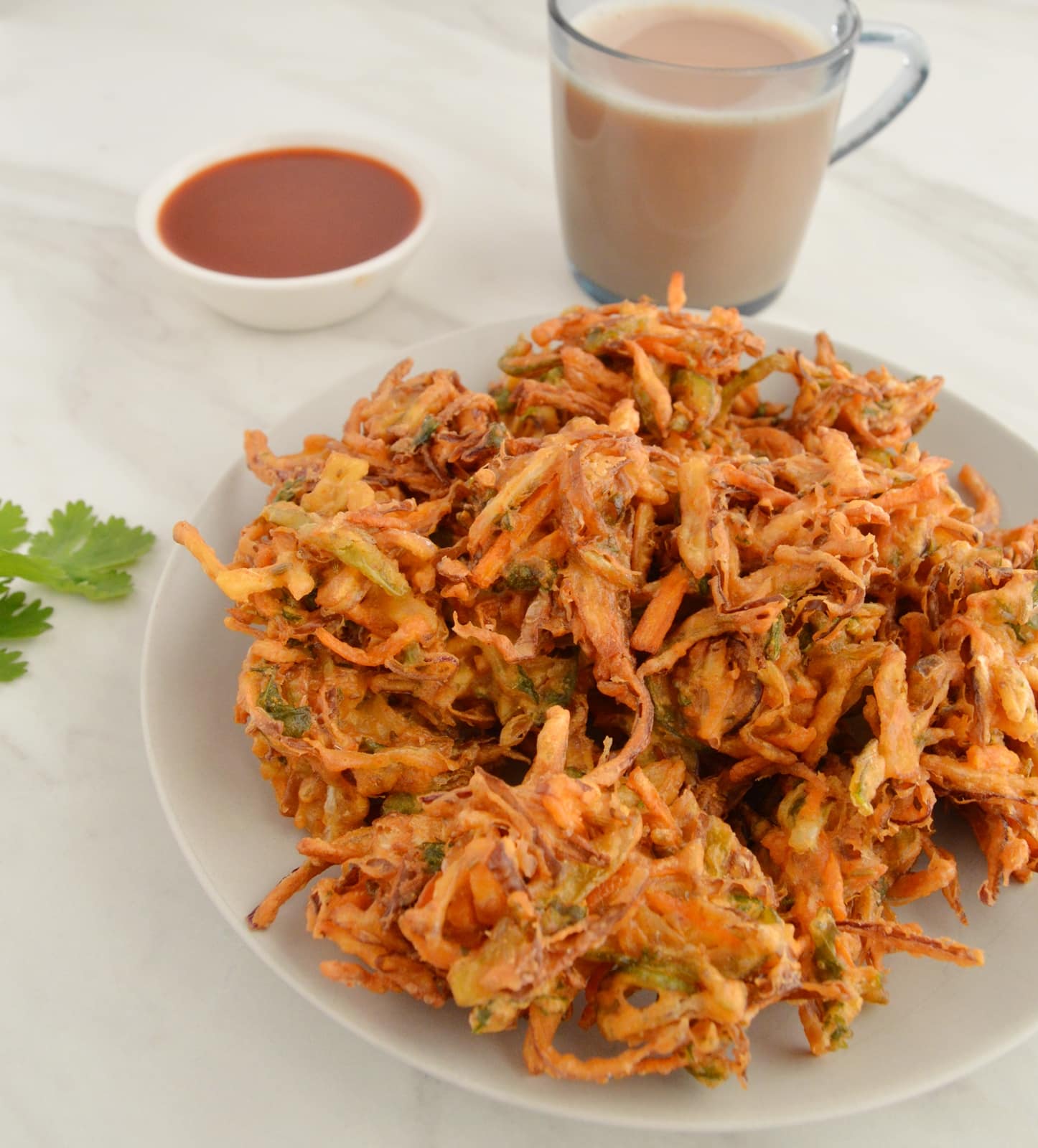
Why are pakoras not crispy?
Pakoras must be fried on medium-high flame. If oil is not hot enough then the pakoras tend to absorb too much oil so they don’t turn crispy. If the oil is too hot then the pakoda turns brown outside but the inner portion remains uncooked. So, it is essential to maintain the temperature throughout the process.
Why are pakoras soggy?
Too thick batter leads to soggy and soft pakoras. Ensure the vegetables are well coated and are easy to drop in the oil.
Storage
Veggie pakora are at their best when they are fresh and crispy. Although you can store leftover mix pakoras in the fridge, they won’t be as fresh in terms of texture and taste.
Fridge: Place the leftover pakoras in an airtight container or zip-top plastic bag and store them in the refrigerator. It ensures their freshness and safety for an extended time. Keep the container or bag tightly sealed to avoid any refrigerator odours from seeping in.
Reheat: When you’re ready to eat pakoras, reheat them in an air fryer. This will help restore the crispiness. You can also reheat them in an oven.
FAQ
Besan is referred to as gram flour, whereas chickpea flour is completely different.
Despite being gluten free, the texture and taste of both flours are completely different. Besan, which is widely known as gram flour, is derived from brown chickpeas, commonly referred to as kala chana in India. The yellow lentils called chana dal, also known as Bengal gram dal, is obtained when these brown chickpeas are split and hulled. When the raw or roasted chana dal is ground we get besan (gram flour).
Whereas chickpea flour is derived from white chickpeas, also known as garbanzo beans or kabuli chana. Chickpea flour is made by grinding dried white chickpeas. White chickpeas are used in dishes like chana masala, chickpea veggie patties, chickpea salad, chickpea spinach curry and chana chaat.
More Recipes with Besan (Gram Flour)
Mirchi Bajji: Gluten free and vegan snack that’s perfect for indulging in on a rainy day or as an appetiser on special occasions.
Zucchini Corn Fritters: A delicious dish made with corn, zucchini, and a blend of spices and herbs.
Masala Peanuts: Spicy and super crunchy tea time snack perfect to enjoy with a hot cup of tea or coffee.
7 Cups Burfi: One of the easy Indian sweets made with basic ingredients and is the most preferred dessert during festival season and special occasions in south India.
Bombay Chutney: Vegan, gluten free side dish made with gram flour and makes a great accompaniment with poori, chapati, idli dosa and roti.
Lauki Kofta Curry: Grated bottle gourd, gram flour, and spices are shaped into patties, pan-fried and served with a rich, creamy and delicious onion tomato curry sauce.
Cabbage Pakoda: These gluten free and vegan fritters are made with finely shredded cabbage, aromatic spices and gram flour.
KEEP IN TOUCH
Do let me know if you make this most loved Indian food vegetable pakora. If you like this recipe kindly consider rating it using stars in the comment section or on the recipe card to help more people find this recipe online. You can stay up to date by following me on Facebook, Pinterest, Instagram or subscribing to my Youtube channel. Or why not subscribe to my blog and get simple recipes straight to your inbox?
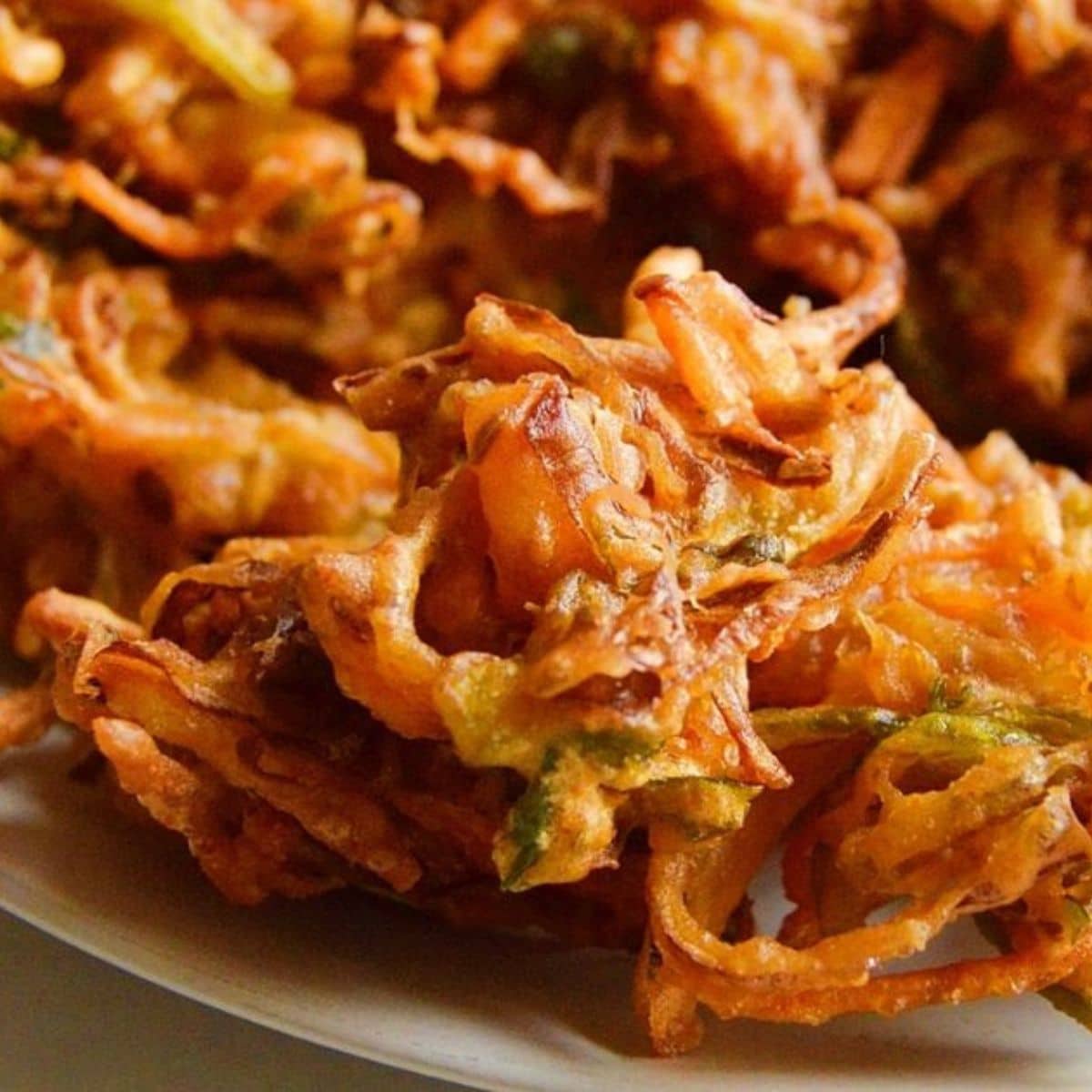
Vegetable Pakora
Ingredients
1 cup = 250ml ; 1 Tablespoon = 15ml ; 1 Teaspoon = 5ml
- ⅓ cup (or) 50 gms Onion thin slices
- ½ cup (or) 65 gms Cabbage shredded/thinly sliced
- ⅓ cup (or) 80 gms Potato shredded/thinly sliced
- ¼ cup (or) 45 gms Carrot thinly slices
- ¼ cup (or) 45 gms Bell Pepper/Capsicum thinly slices
- handful Coriander chopped
- 1 Teaspoon Fennel seeds
- 1 Teaspoon Carom seeds/Ajwain
- 2 Green Chilli finely chopped
- 1 inch Ginger peeled and grated
- pinch Turmeric Powder
- 1 Teaspoon Red Chilli Powder
- ½ cup (or) 90 gms Gram Flour
- ¼ cup Water
- 4 cups Oil for deep frying
- Salt as required

Instructions
- Crush fennel seeds and carom seeds in mortar and pestle.1 Teaspoon Carom seeds/Ajwain, 1 Teaspoon Fennel seeds
- In a wide bowl, combine gram flour, dry spices, salt, crushed spices and mix until well combined.1 Teaspoon Fennel seeds, 1 Teaspoon Carom seeds/Ajwain, 1 Teaspoon Red Chilli Powder, ½ cup (or) 90 gms Gram Flour, Salt, pinch Turmeric Powder
- Next, add the vegetables and mix well.⅓ cup (or) 50 gms Onion, ½ cup (or) 65 gms Cabbage, ⅓ cup (or) 80 gms Potato, ¼ cup (or) 45 gms Carrot, ¼ cup (or) 45 gms Bell Pepper/Capsicum, handful Coriander, 1 inch Ginger, 2 Green Chilli
- Now add 3-4 tablespoons water and start to mix the vegetables. Add 2-3 tablespoons more water if required and mix until you achieve a thick batter that just coats the vegetables and binds vegetables together.¼ cup Water
- Heat oil in a deep frying pan on medium heat.4 cups Oil
- Drop pakoras in hot oil, fry for about 5-7 minutes flipping as needed to ensure even cooking. Fry until both sides turn a light golden colour and crispy. Once cooked drain them on a paper towel to absorb excess oil.
- Fry pakoras in batches until all the batter finishes.
- Serve pakoras with chutney and chai.
Notes
Nutrition
Related
Looking for other vegetable appetiser recipes like this? Try these:

Welcome to Flavours Treat. I share vegetarian recipes made with wholesome, mostly fresh ingredients. Every recipe has easy-to-follow instructions with process shots (detailed step-wise pictures), a short video and lots of tips to help your cooking journey. Read more



Vegetable pakodas are looking so perfectly crispy as well as yummy…..Beautifully made and a lovely share for the theme !!!!
Thank you Sasmita.
My all-time pakodas are looking absolutely delicious and crispy. I can have them any time of the day. You made them perfectly and beautiful share!
I’m glad you like it Pavani.
These look so crispy and delicious! A perfect tea time snack. However, I am not a tea person but will finish these as it is. Love to watch the video as well!
Thank you Geetanjali.
Crispy mixed vegetables pakoras are a delightful treat during monsoon season. Loved your presentation here . The fritter platter looks very inviting !
Thank you Poonam.
All time favorite!!! Looks amazing dear! Taste bhi and health bhi with all the veggies <3
Thank you Vanitha.
Perfect crispy yummy pakoda for this lovely monsoon season. Beautifully made. Loved the detailed post.
Thank you, Ruchi.
Oh my, The vegetable pakoda looks ao delicious. It’s perfectly crispy and likes to try.
Thank you Lathiya.
It is such a lovely treat to have pakoras each time. Love the addition of dry spices to the besan, I have hardly tried that.
Dry spices add lovely flavours to the pakoras. Do try Seema I’m sure you like it.