
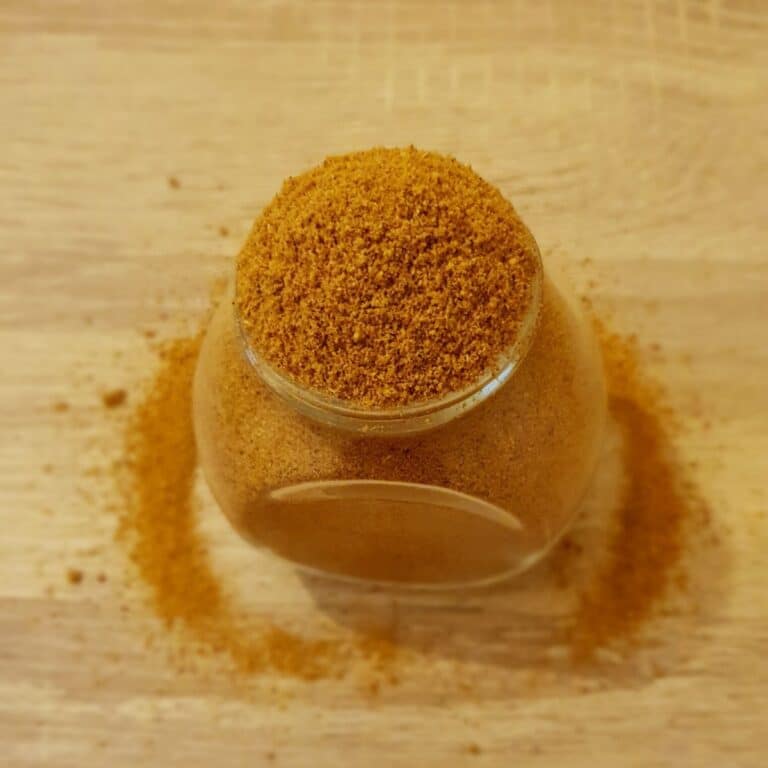
Puliyogare powder is a spice mix used to prepare a traditional south Indian dish puliyogare. It is often served as prasadam (offering) in temples and is also a popular dish for festivals or special occasions in South India.

This south Indian special spice mix is made with an array of aromatic spices. It is also known as pulihora, puliyodarai, imli rice or tamarind rice.
Not only does this flavourful spice mix come in handy to whip up puliyogare quickly on busy weekdays, but it’s also a convenient choice to serve unexpected guests.

Typically, to prepare puliyogare with the store-bought ready mix, we have to combine the spice powder with tamarind pulp or paste, cooked rice, salt, and other seasonings. In this homemade puliyogare powder, tamarind is included. So additional tamarind pulp or paste is not required thereby saving time.
Dried red chilies, coriander seeds, fenugreek seeds, mustard seeds, chana dal, urad dal, curry leaves, coconut, tamarind and sesame seeds are the key components of pulihora powder. These ingredients are dry roasted to enhance their flavours and then ground into a fine powder.
Why you will love puliyogare powder?
Tamarind is included in the powder so no tamarind paste or pulp is required to cook puliyogare rice.
It can be stored for a long time.
Preparing puliyogare is faster with this homemade instant premix.
Ingredients

- Whole spices: Coriander seeds, cumin seeds, fenugreek seeds, black peppercorn, sesame seeds, mustard, asafoetida, byadgi red chillies, spicy dried red chillies.
- Lentils and other ingredients: Urad dal, chana dal, tamarind, jaggery powder, desiccated coconut and curry leaves.
See the recipe card for quantities.
How to make puliyogare powder?

On the stovetop, put a heavy bottom steel pan or kadai and heat it over medium-low heat.
Once the pan is hot, dry roast chana dal stirring regularly for 2-3 minutes or until they are aromatic.
Transfer them to a bowl and put the pan back on the stove.
In the same pan, dry roast urad dal stirring regularly for 1 minute or until they are aromatic.
Transfer it to the same bowl containing roasted chana dal. Put the pan back on the stove.

Now add coriander seeds and dry roast over medium-low heat stirring regularly for 2 minutes. Now add fenugreek seeds and roast them for a minute.
Add cumin seeds followed by black peppercorn and roast for a couple of minutes or until they start releasing aroma. Keep stirring regularly.
Now add both byadgi and spicy red chillies

Stir in sesame seeds, asafoetida and roast for 2 minutes.
Add curry leaves, desiccated coconut and roast for a minute and switch the heat off.
Transfer them to a bowl of already roasted spices.
Allow the roast spices to cool completely.

Meanwhile, add tamarind and roast on low flame for a minute or two.
Switch the heat off and let it cool.

Mix the spices in the bowl with a spoon.
Add the roasted spices to the mixie jar.
Close the jar with a lid and grind again until powder.

Now add salt, jaggery powder and roasted tamarind to the ground spice blend in the mixie jar.
Close the jar with a lid and grind again until powder.
Transfer the puliyogare mix into a bowl and grind the remaining spices in batches.
Once all the spices, jaggery powder, tamarind and salt are ground into powder, mix the mixture with a spoon until well combined.
Allow the freshly ground tamarind rice powder to cool completely and then transfer it to a clean and dry glass jar.
Check out the instant puliyogare recipe and another Karnataka special vangibath masala powder on the blog.
Substitutions and Variations
Curry Leaves: I had to use dried curry leaves that I had on hand. You could use fresh leaves instead, but make sure to fry a little longer to remove the moisture.
Sesame Seeds: You could take out 1 tablespoon of roasted sesame seeds and grind the remaining seeds. Combine the whole seeds with the ground puliyogare powder at the end before transferring it to a container. Whole sesame seeds add a crunch to puliyogare.
Black Sesame Seeds: You could use black sesame seeds instead of white. Perhaps black sesame seeds impart intense flavour and enhance the taste.
Coconut: Dry coconut could be used instead of desiccated coconut.
Storage
To preserve the quality of puliyogare powder, store it in an airtight container, in a cool and dark pantry or kitchen cupboard, away from heat and sunlight.
The spice mix can keep its freshness for 2 months before losing its flavour and aroma. Generally, this spice mix has a short shelf life due to the presence of coconut.
Tips and Tricks
Quicken Cooling Process: Spread the ground masala powder on a dry plate or baking sheet and let it cool completely. This method also quickens the cooling process.
Red Chillies: The heat of red chillies can vary depending on the variety. Adjust the spices and tamarind to suit your personal preference. To achieve a balanced flavour profile, I combined mild byadigi chillies for colour and round spicy chillies for heat in the powder.
Roasting Spices: Roast the spices over a medium-low flame. Roasting on high flame will cause the spices to get burnt.
Cool Roasted Spices: Before grinding, make sure to let the spices cool down completely.
Cool Spice Blend: Allow the ground puliyogare powder to cool before transferring it to a container. Otherwise, the powder’s shelf life will be shortened.
Grind in Batches: Depending on the capacity of the blender or spice grinder, grind the roasted spices in batches.
Heating Pan: Before roasting the spices, let the pan get hot.
How to cook puliyogare with ready mix powder?
Combine freshly ground spice powder with a little water and make a paste.
Heat sesame oil in a kadai/pan over medium heat.
Once the oil is hot, fry peanuts until they release a roast aroma. Remove them from the pan and keep in a plate.
Add mustard seeds, cumin and fry for a minute or until the mustard splutters.
Now fry urad dal, chana dal for a couple of minutes or until they start to turn a light golden colour.
Add red chillies, curry leaves and fry for a minute.
Reduce the heat to the lowest setting and add puliyogare paste.
Mix well until well combined and cook stirring regularly until the oil specks appear on the top.
Switch the heat off.
Add the required amount of gojju to the cooked rice and gently mix with a spoon to combine. Check and add salt only if necessary.
FAQ
Puliyogare, also known as tamarind rice, is a popular South Indian dish made with cooked rice and a special paste or mix called “puliyogare gojju.”
The key ingredients in puliyogare gojju are tamarind, coriander seeds, fenugreek seeds, red chilies, coconut and jaggery which gives the dish its tangy, spicy and slightly sweet flavour profile. The puliyogare paste is typically mixed with cooked rice, peanuts and seasoning.
You could store homemade spice powder in the fridge/freezer to maintain freshness and aroma for a longer time. Put the homemade masala in a clean and dry air-tight container or ziplock bag and keep it in the fridge.
Consider having a small tight jar of pulihora powder in the pantry cupboard and refill it when required.
Ensure the container or ziplock bags are sealed properly to prevent any moisture trap which would eventually spoil the spice blends.
Yes, you can. Perhaps make a big batch of gojju and store it in the fridge in a dry airtight container. This is a fabulous meal prep technique to save time and energy when making puliyogare on busy days.
KEEP IN TOUCH
Do let me know if you try this Karnataka style puliyogare powder recipe. If you like this recipe kindly consider rating it using stars in the comment section or on the recipe card to help more people find this recipe online. You can stay up to date by following me on Facebook, Pinterest, Instagram or subscribing to my Youtube channel. Or why not subscribe to my blog and get simple recipes straight to your inbox?
Puliyogare Powder
Equipment
- 1 Heavy Bottom Steel Pan
- 1 Spoon
- 1 Mixer Grinder
Ingredients
1 Cup = 250ml ; 1 Tablespoon = 15ml ; 1 Teaspoon = 5ml
- 121 gms (or) ½ Cup Chana Dal
- 108 gms (or) ½ Cup Urad Dal
- 75 gms (or) 1 Cup Coriander Seeds
- 30 gms (or) ¼ Cup Cumin Seeds
- 12 gms (or) 2 Tablespoons Black Peppercorn
- 20 gms (or) 2 Tablespoons Fenugreek Seeds
- 150 gms (or) 1 Cup Sesame Seeds
- 40 gms (or) 1 Cup Byadgi Red Chillies
- 30 gms (or) ¾ Cup Spicy Red Chillies
- 70 gms (or) ¾ Cup Desiccated Coconut
- 20 gms (or) 2.5 Cups Curry Leaves
- 5 gms Asafoetida/ Hing
- 200 gms (or) 1.5 Cups Tamarind
- Salt as required
- ¼ Cup Jaggery Powder

Instructions
- On the stovetop, put a pan or kadai and heat it over medium-low heat.
- Once the pan is hot, dry roast chana dal stirring regularly for 2-3 minutes or until they are aromatic.121 gms (or) ½ Cup Chana Dal
- Transfer them to a bowl and put the pan back on the stove.
- In the same pan, dry roast urad dal stirring regularly for 1 minute or until they are aromatic.108 gms (or) ½ Cup Urad Dal
- Transfer it to the same bowl containing roasted chana dal. Put the pan back on the stove.
- Now add coriander seeds and dry roast over medium-low heat stirring regularly for 2 minutes. Now add fenugreek seeds and roast them for a minute.75 gms (or) 1 Cup Coriander Seeds, 20 gms (or) 2 Tablespoons Fenugreek Seeds
- Add cumin seeds followed by black peppercorn and roast for a couple of minutes or until they start releasing aroma. Keep stirring regularly.30 gms (or) ¼ Cup Cumin Seeds, 12 gms (or) 2 Tablespoons Black Peppercorn
- Now add both byadgi and spicy red chillies.40 gms (or) 1 Cup Byadgi Red Chillies, 30 gms (or) ¾ Cup Spicy Red Chillies
- Stir in sesame seeds, asafoetida and roast for 2 minutes.150 gms (or) 1 Cup Sesame Seeds, 5 gms Asafoetida/ Hing
- Add curry leaves, desiccated coconut and roast for a minute and switch the heat off.20 gms (or) 2.5 Cups Curry Leaves, 70 gms (or) ¾ Cup Desiccated Coconut
- Transfer them to a bowl of already roasted spices.
- Allow the roast spices to cool completely.
- Meanwhile, add tamarind and roast on low flame for a minute or two. Switch the heat off and let it cool.200 gms (or) 1.5 Cups Tamarind
- Transfer the cooled spices into a mixer jar and grind it to a powder.
- Now add salt, jaggery powder and roasted tamarind to the ground spice blend in the mixie jar.Salt, ¼ Cup Jaggery Powder
- Close the jar with a lid and grind again until powder.
- Now add tamarind, jaggery powder and salt to the mixer jar and grind again.
- Transfer the puliyogare mix into a bowl and grind the remaining spices in batches.
- Once all the spices, jaggery powder, tamarind and salt are ground into powder, mix the mixture with a spoon until well combined.
- Allow the freshly ground tamarind rice powder to cool completely and then transfer it to a clean and dry glass jar.
Notes
Nutrition
Related
Looking for other homemade spice blends like this? Try these:
More Recipes from Karnataka Cuisine

Welcome to Flavours Treat. I share vegetarian recipes made with wholesome, mostly fresh ingredients. Every recipe has easy-to-follow instructions with process shots (detailed step-wise pictures), a short video and lots of tips to help your cooking journey. Read more

I really enjoyed reading this. Puliyogare always sounds so comforting and full of tradition
Excellent, if you could list ingredients in tablespoons or cup portion it would be easy for many people.
Hi Kalyani, I have mentioned both metric and cup measurements in the recipe card. Kindly recheck and let me know if you need any further information.
I can’t buy tamarind here in New Zealand. Could I substituted amchoor, instead?
Anne, amchoor may be used I think. But the flavour, colour, and taste can differ from that of authentic puliyogare.